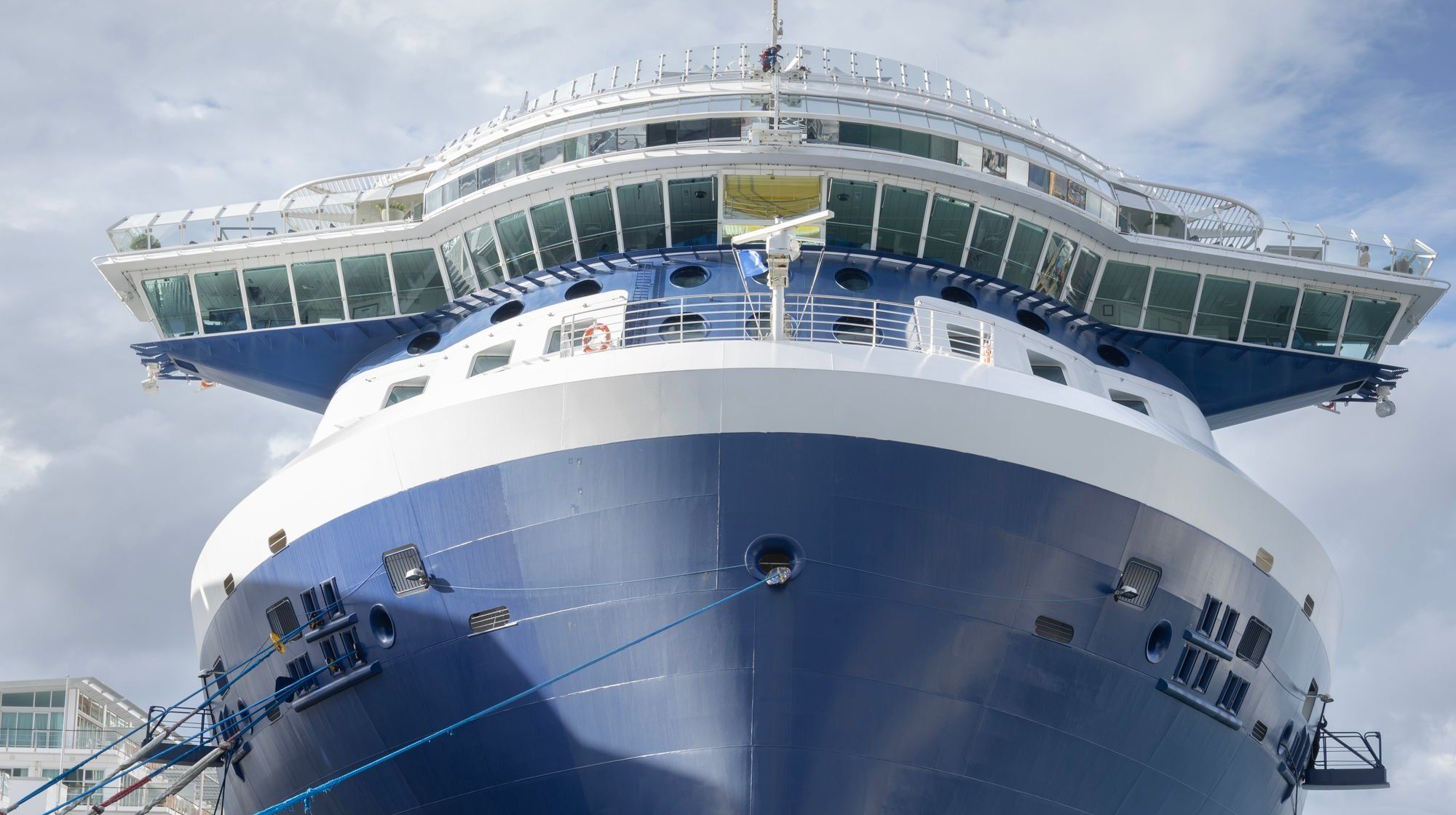
If fewer cruise ships are calling at your port this summer, don’t wait it out — re-plan for it. National port calls are still well below the 2023/24 peak, and some ports don’t expect a meaningful upturn until 2028/29. Work out how much of your revenue really depends on ship days, rebuild this season’s forecast from the confirmed port schedule, cut the costs that only worked with more ships, and keep borrowing for timing gaps, not a permanent hole.
The season opened in late August. This guide is for the café two streets back from the wharf, the shuttle operator, the shore-excursion guide, the souvenir and merino shop, and the winery that hosts coach groups. Those are the businesses whose summers used to be built around the ship schedule.
What’s actually happening to cruise ship visits?
New Zealand’s cruise calls peaked in 2023/24 at more than 1,100 port calls. Then cruise lines started moving ships elsewhere, blaming costs, border charges and biofouling rules. Visits fell sharply over the next two seasons. Preliminary figures reported in May 2026 pointed to a further small drop in port calls for 2026/27, with the North Island losing around 41 visits and the South Island gaining 23. In other words, the slide is levelling out rather than reversing.
The Government is clearly paying attention. In April 2026 the Tourism Minister convened a second cruise forum with the industry, noting cruise had put $1.37 billion into the economy in the previous financial year. When the season launched on 29 August 2026, it said close to 200,000 cruise passengers were expected and that winter cruising should return next year.
Locally, the picture is sharper. Napier is a good example because its figures are public:
| Season | Cruise vessels at Napier |
|---|---|
| 2023/24 | 89 |
| 2024/25 | 78 |
| 2025/26 | 55 |
| 2026/27 | 50 |
| 2027/28 (booked) | 50 |
| 2028/29 (booked) | 58 |
Source: Napier Port bookings as reported in July 2026.
The Bay of Islands went the same way, going from 87 ships arriving in 2023/24 to 47 scheduled for 2025/26. For a business in a town like that, this isn’t a bad week. It’s two or three thinner summers in a row, and the plan has to treat it that way.
Which businesses feel it most?
How exposed you are depends on how much of your takings walk off a gangway. As a rough guide:
- Highly exposed: shore-excursion and walking-tour operators, port shuttles, hop-on buses, souvenir shops near the terminal, and cafés with a direct line of sight to the wharf.
- Moderately exposed: wineries, galleries and attractions that sell coach-group packages; restaurants in the waterfront strip; tour guides who split their time between cruise and independent visitors.
- Indirectly exposed: suppliers to all of the above (bakeries, linen services, printers, mechanics who keep the tour vans running) and the casual workers whose shifts disappear.
The indirect group often notices last. Orders slow, a few customers start paying later, and the gap only shows up in the bank balance in February.
How do I measure how much of my revenue depends on ship days?
Don’t guess. Your own data will tell you more accurately than any industry report.
- Pull last season’s daily takings from your POS or bank feed for October to April.
- Mark the ship days. Your port company or regional tourism organisation publishes the cruise schedule, and last season’s is usually still online.
- Compare like with like. Average a ship-day Tuesday against non-ship Tuesdays in the same month. Leave out public holidays and school-holiday weeks.
- Work out the ship-day lift — the extra takings a ship brings — and multiply it by the number of ship days you’ll lose this season compared with last.
That figure is your revenue at risk. Then work out your margin on it. If a ship day mostly means extra coffee and a few more souvenirs, a lot of that extra revenue was going to stock and casual wages. So the real hit to cash is smaller than the drop in sales, provided you cut those variable costs at the same pace.
A worked example
The figures below are made up to show the method. A gift and merino shop near a regional port finds that ship days last season averaged about $2,400 in takings, against $900 on comparable days without a ship. That’s a lift of $1,500. The confirmed schedule shows 9 fewer ship days in its town this season.
- Revenue at risk: 9 × $1,500 = $13,500
- Gross margin on that extra trade: around 50%, so lost gross profit is about $6,750
- Casual wages it no longer needs on those days: about $2,000
- Net cash hit across the season: roughly $4,750
That’s a real number, but it’s manageable once the owner sees it in October rather than finding out in March. It also tells them that over-ordering for ships that aren’t coming would cost far more than the drop in sales.
How should I re-plan the season around the port schedule?
Start from a fresh forecast. Business.govt.nz’s guidance on cash flow forecasting warns against “being too optimistic” about income, and that matters doubly this year. Then work through these:
- Forecast by week, not month. Ship days cluster. Three ships in one week and none the next will look fine on a monthly view and still leave you short on a Friday payroll.
- Order stock to confirmed ships. Pre-season buying was sized for last year’s schedule. Trim it, or arrange deliveries closer to each run of ship days.
- Roster casuals to the calendar. Publish rosters around confirmed arrival dates and keep a short list of staff happy to pick up extra shifts.
- Chase other visitors. International arrivals overall have kept growing, and domestic visitors, events and independent travellers don’t arrive by ship. Look at opening hours, local partnerships and online bookings with them in mind. Our guide to New Zealand tourism seasonality shows where demand sits across the year.
- Re-check fixed costs. A second staff van, a pop-up kiosk at the terminal, or a lease for a busy-summer storage unit may no longer earn its keep.
If your summer is now thinner, your winter will feel longer too. Our guide on getting a hospitality business through the off-season covers the cost side of that in more detail.
Need a facility in place before the next quiet stretch? It takes about a minute to check your options, and there’s no credit check when you first enquire.
What about provisional tax and GST?
A weaker season changes your tax numbers too, and the dates don’t move. For standard balance dates, the next provisional tax instalments fall on 15 January and 7 May, right as this season’s takings are coming in.
- Talk to your accountant about re-estimating. If last year was a bumper year and this one won’t be, the standard option can have you paying instalments based on income you no longer earn. Re-estimating can bring them down. Underestimate, though, and IRD can charge interest, so build the estimate from your new forecast.
- Keep GST in its own account. When takings drop, it’s tempting to dip into the GST you’ve collected. IRD charges late payment penalties from the day after the due date, so borrowing from your tax money usually ends up costing more.
Our guide on provisional tax for seasonal businesses goes through how the three options suit an uneven year.
When does funding make sense, and when doesn’t it?
This is where the downturn needs straight talk. Credit is excellent at moving cash across time. It doesn’t create demand that isn’t there.
Funding fits when:
- you need to buy stock or pay crew ahead of a confirmed run of ship days, and the takings will repay it within weeks;
- a quiet patch between ships (or the winter that follows) leaves wages and rent due before the next busy period;
- a provisional tax instalment lands before the season’s income has caught up;
- you’re shifting the business towards independent and domestic visitors, and the new van, website or fit-out will pay for itself.
Funding doesn’t fit when the plan is to borrow each month to cover a shortfall that the confirmed schedule says will last two more summers. That needs a cost and strategy response first.
For the first group, a business line of credit is usually the cleanest tool. You draw only what each gap needs, repay as the ships come in, and the limit is there again next season. If you own property and the need is bigger or one-off, such as repositioning the business, a property-secured top-up of $20,000 to $1m is worth considering. Our tourism and hospitality funding page explains how lenders read a seasonal business’s bank statements. That matters this year, when last summer’s figures may look weaker than the business really is.
Getting ahead of a thinner summer
You can’t control how many ships turn up, but you can decide how ready you are when they don’t. The businesses that come through these seasons in good shape will be the ones that rebuilt their forecast early and had a facility in place before they needed it. Their peers will be the ones applying for funding in a hurry in the middle of a dry patch.
That’s what we do every day for New Zealand businesses whose income comes in waves. The enquiry form is a 60-second job, and nobody runs a credit check at that first step. Your details stay with us too. We don’t hawk them around a pile of lenders, so you won’t spend the week fielding calls from strangers. One of our team works through your situation (your port, your schedule, your numbers) and rings you to talk it over.
One request: fill the form in accurately, especially your turnover and how long you’ve been trading. That way we can match you to the right option first time instead of wasting a week on the wrong one.